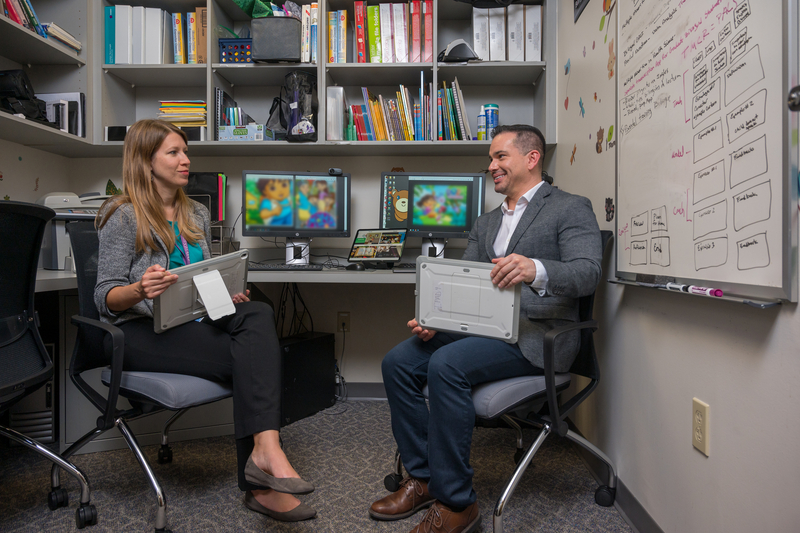
Research from the Davies School of Communication & Sciences Disorders’ Emily Lund and Jean Rivera Perez is helping reshape how educators and clinicians support bilingual children with hearing loss, challenging long-held assumptions about language development. Their work was recently featured in The Dallas Morning News, which highlighted their research examining how Spanish-English bilingual children develop early literacy skills.
For years, some families were encouraged to focus on a single language after a child was diagnosed with hearing loss. Lund said the evidence no longer supports that approach.
“There's really not evidence that bilingualism itself is harmful,” Lund said. “Children can absolutely learn two languages with the right support.”
Rivera Perez emphasized that maintaining a family's home language strengthens both communication and cultural identity.
“When families continue using the language they're most comfortable speaking, they’re able to provide richer language experiences for their children,” Rivera Perez said. “That's important not only for language development but also for preserving family relationships and culture.”
Their research continues to inform best practices for supporting bilingual children with hearing loss, helping families and educators make evidence-based decisions that foster language, literacy and long-term academic success.