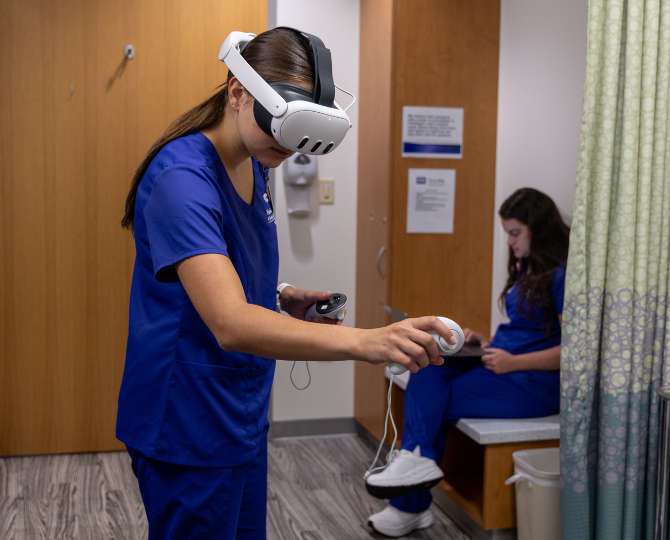
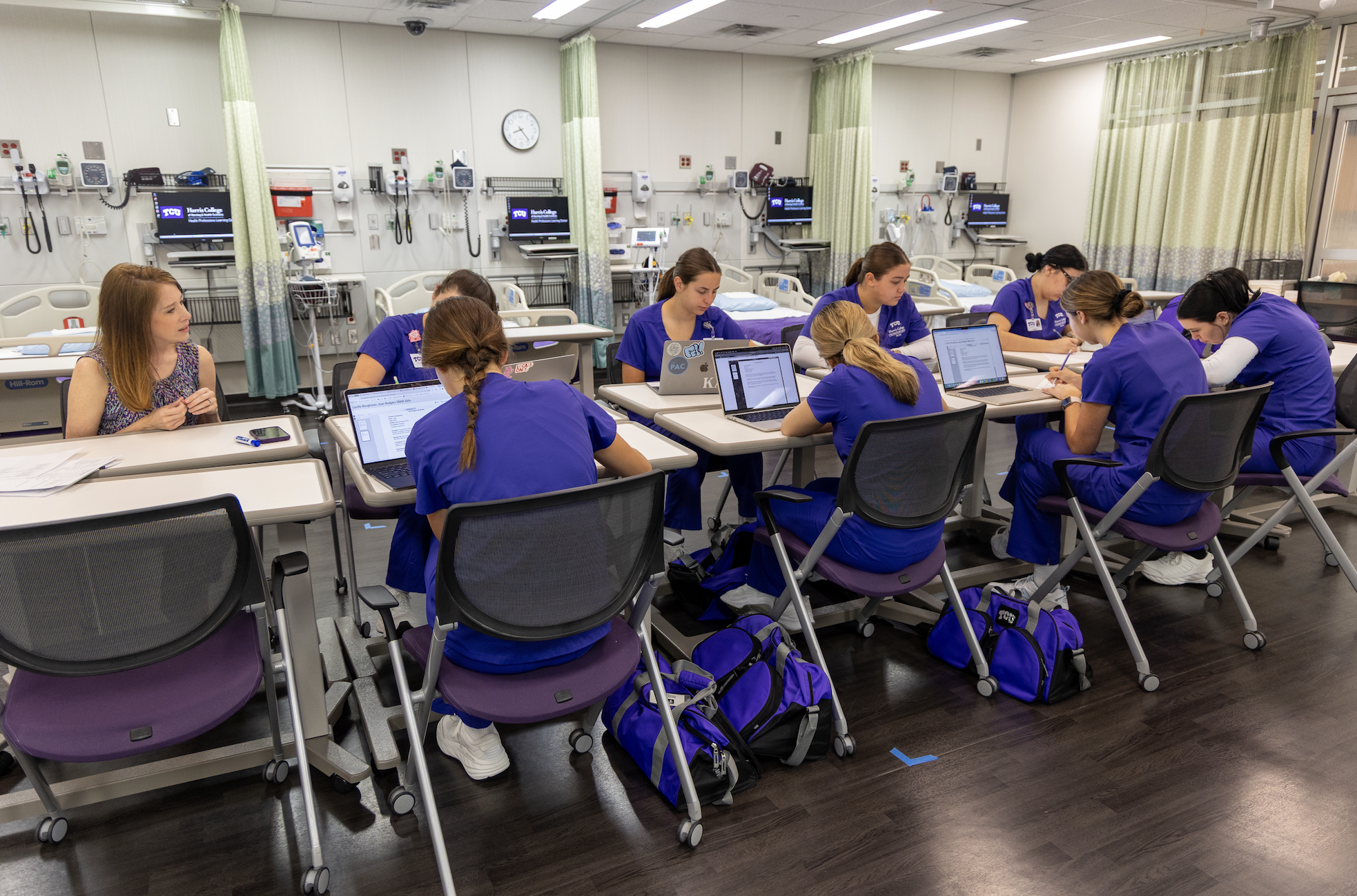
One moment, TCU nursing students are sitting in a classroom. The next, they’re assessing a patient in a busy hospital room. Thanks to virtual reality technology, students in the Harris College of Nursing & Health Sciences are building assessment and communication skills to prepare them for clinical experiences.
Ashley Franklin ’03 (MSN ’10), Polly & Tex Rankin Endowed Professor of Nursing, said use of the VR simulation headsets in the undergraduate health assessment class, Nurse Practicum I, extends practice time and exposes students to a virtual, acute care environment to prepare for clinicals.
“Students appreciated, in particular, seeing virtual patients who weren’t healthy, who had differences in their physical assessments or, in some cases, symptoms that they described,” Franklin said.
VR-Powered Learning
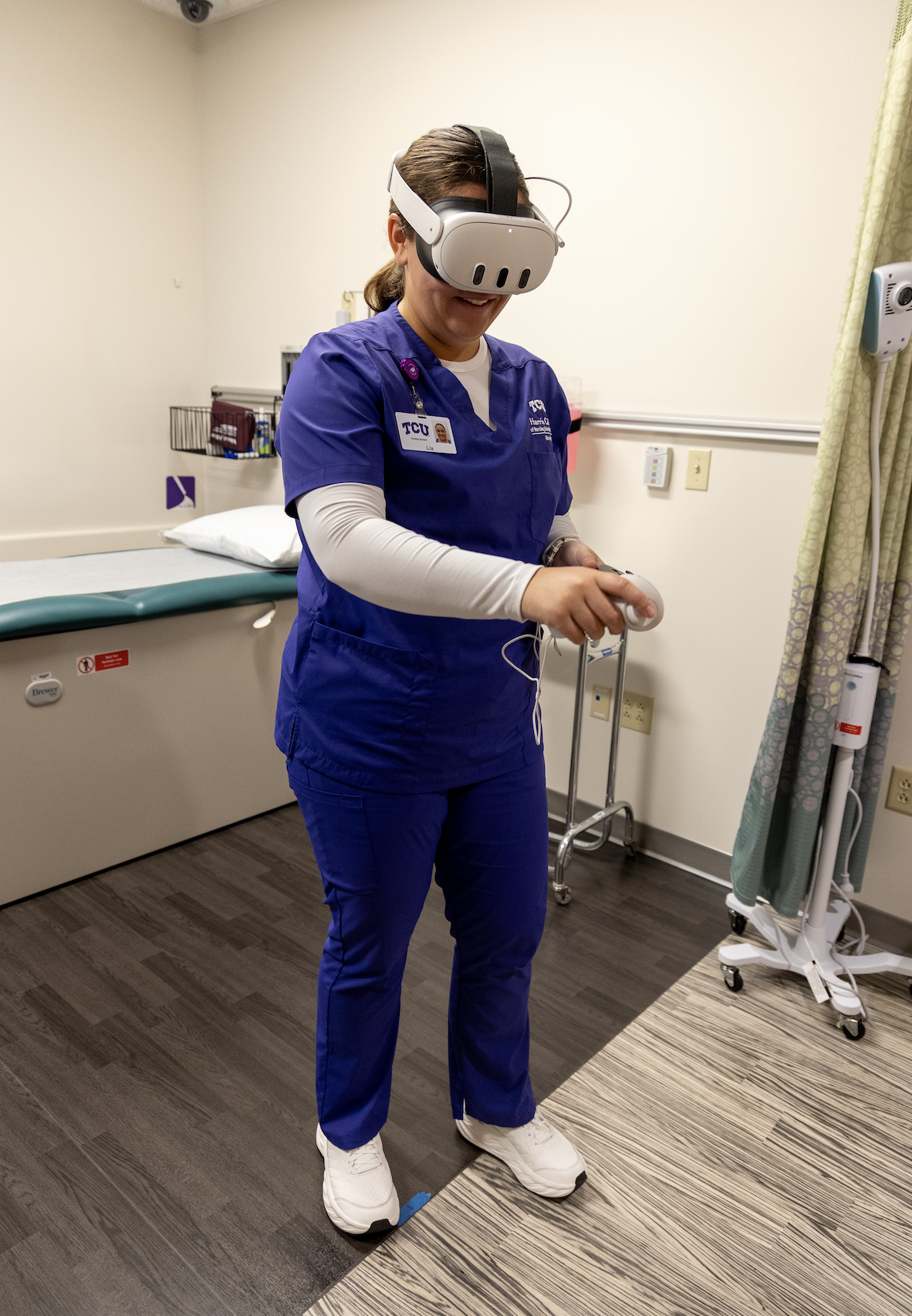
Nursing students put on the VR headsets – equipped with speakers and a microphone – and have handheld remotes in both hands, which allow them to interact with virtual patients and equipment. This allows students to hear the conversation with the virtual patient, ask questions, respond and utilize equipment in a virtual environment.
Franklin said she was pleasantly surprised that her students expressed their appreciation for communicating with virtual patients. After just a few virtual patient encounters, students seemed able to confidently enter a virtual patient’s room, check for environmental safety, talk with the patient and focus a physical assessment.
“Students got a handoff that had a little bit of information and their medical history, how long they’d been in the hospital and what their chief complaints were,” Franklin said. “So, we’re situating skills practice into a patient’s case, and it made things feel a little more active and engaged our students in a different way.”
Each virtual patient scenario lasts about 20 minutes. Faculty facilitators prebriefed the students before each virtual patient and conducted debriefings to compare and contrast the virtual patients and nursing priorities.
Preparing for Nursing Careers
Over the course of the semester, students met seven virtual patients and practiced a variety of assessment skills.
“We were hoping that by introducing virtual reality in the first course students take, we could increase the amount of simulation exposure,” Franklin said. “We wanted to standardize their experience so that everyone got to meet all of the same seven virtual patients.”
Franklin said faculty were also eager to implement this new course and innovative curriculum, especially anything involving technology, adding that graduate faculty have also been interested in this technology-based teaching after seeing the success of the undergraduate course.
Technology-Based Teaching
TCU nursing students integrate technology in their clinical courses, including electronic health records and patient care equipment. The virtual patient scenarios allow students additional practice with technology in a virtual setting.
As technological advances become more common and are already in use in the Anne Burnett Marion School of Medicine at TCU, Franklin said she wanted to keep the human element and infuse communication into the lesson plan for the VR setup.
“Taking care of patients is very holistic, so it made logical sense to us that we started to take care of patients in a virtual setting, even while our nursing students were on campus and in the Health Professions Learning Center,” Franklin said.
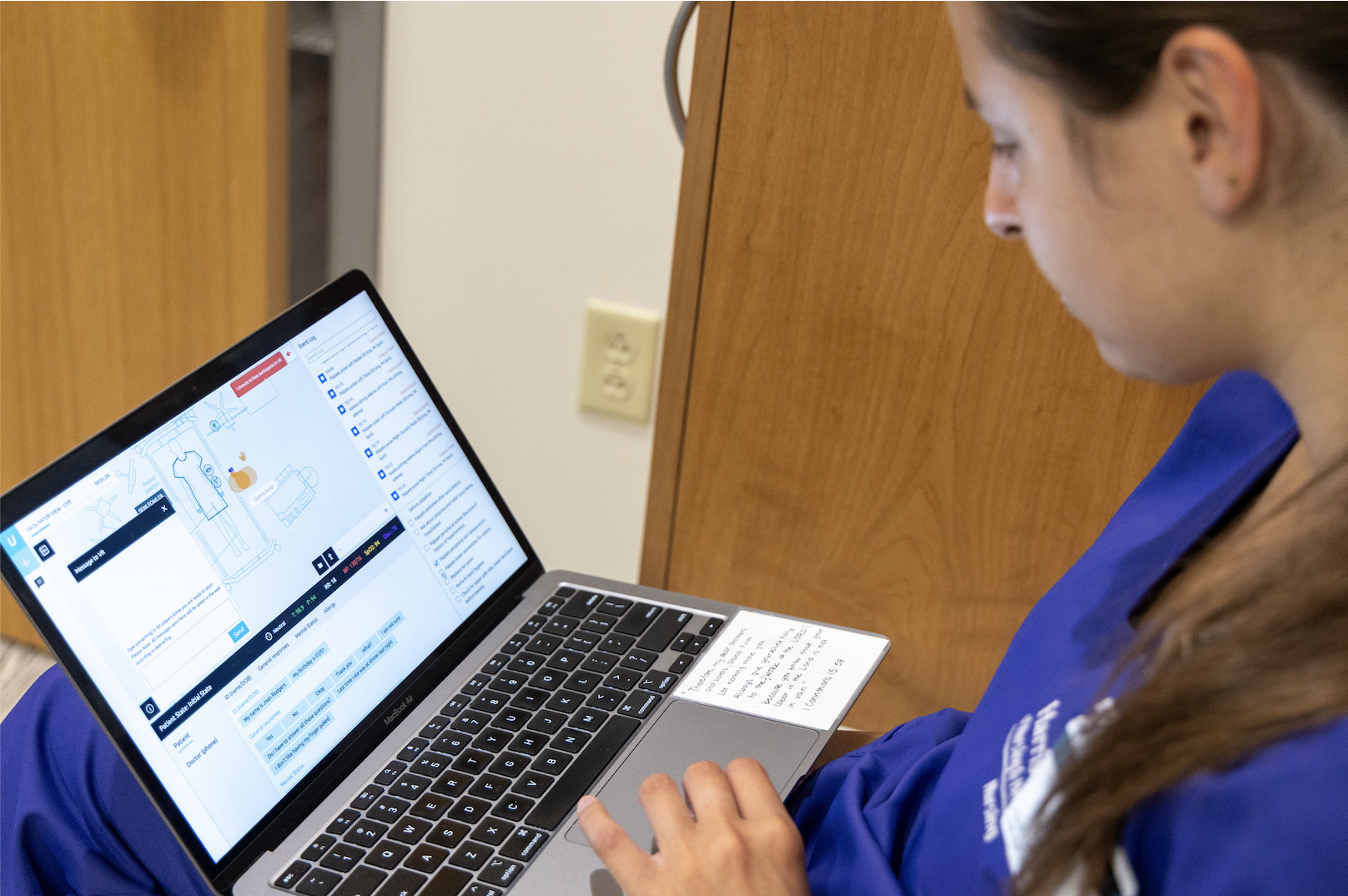
Nursing students were also familiar with the graphics, layout and software used in the VR setting because it was made by the same vendor that is used in microbiology, a pre-requisite course for taking this health assessment course during their sophomore year. The company that created the software, UbiSim, was developed by nurses, for nurses all around the world.